Comparing Tesla, Ford, & VW's Electrical Architectures
Munro Live1 HN recommenders · 2021–2021
381K views · interview · dated · Uploaded 2021-05-07
Sandy Munro sits down with engineers from 3IS to compare the electrical architectures of the Tesla Model Y, Ford Mach-E and VW ID.4. They discuss ECU counts, bus architectures and what the differences mean for cost and integration.
HN recommends it as a fair, technical comparison and cites it when discussing why legacy automakers have more boxes and complexity than Tesla.
 9:31
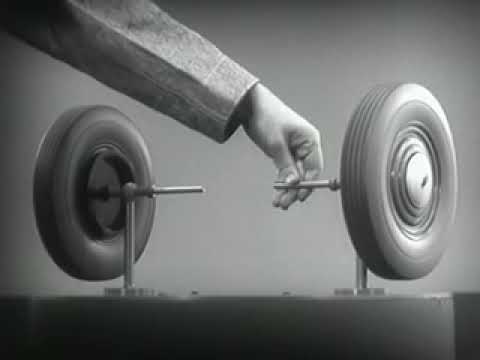
Around The Corner - How Differential Steering Works (1937)
US Auto Industry
 17:08
Cities Aren't Loud: Cars Are Loud
Not Just Bikes
 41:39
BOLTR: Juicero, Cold Press Juicer for Rich Weirdos
AvE
 33:33
Longer-lasting light bulbs: it was complicated
Technology Connections
 9:31
How Differential Gear works (BEST Tutorial)
ConceptVBS
 3:18
A New Car UI: How touch screen controls in cars should work
Matthaeus Krenn
 35:07
These Stupid Trucks are Literally Killing Us
Not Just Bikes
 5:49
The 919 Tribute Tour: On-board record lap, Nordschleife.
Porsche
3 comments from Hacker News
I'm not a Tesla fanboy but I didn't think it was biased. E.g.: Right off the bat he talks about the number of ECU[1] of Tesla compared to others. He points out that this will result in inferior quality due to the number of connections. A no-brainer with cascading effects which has many other advantages for Tesla[2]. Spelling this out will upset a lot of people because it's a valid attack that also knocks the other designs into a corner that makes one wonder what's the point of even continuing. (at least if one expects a ranking on quality etc - then there is no recovering from that). The missing CAN-FD[3] bus-speed info on Tesla is interesting. It seems Tesla is doing it's own thing here with CAN-FD. Maybe a proprietary implementation (I couldn't make sense of it)? The other connections like Ethernet, LIN etc are also much less and I'm assuming this can be attributed to simply having such a small number of ECU's too. No idea what's going on with the missing OBD-II but I'd imagine if you want to roll out a proprietary after-market technology that can only be serviced at a Tesla shop then killing this makes sense in order to lock everyone in (customers but more relevant after-sales). Tesla Y has no replaceable fuses, ... and it goes on ... and on ... As a piston/gear-head who hates the brand, and strongly dislikes Musk it's a lot to digest and put up with. I don't understand though why the video is supposed to be biased or not accurate. It doesn't seem they're releasing any inf
I think it's the same with everything like agile software development etc. There are some ideas with some good parts, but the way people end up applying them can cause a lot of problems. People should understand the domain, do risk analysis, change management etc. For example car companies are suffering from chip shortages. Maybe they should have stockpiled more? But on the other hand, the "parts bin" is the worst obstacle preventing innovation and integration in established manufacturers. Why do new companies like Tesla have way less electronic parts while legacy manufacturers have lots of separate boxes and wiring, all reducing reliability, increasing cost, space and mass. Because for a legacy manufacturer it makes more sense to use the same parts from the "parts bin" as for their previous model - it's just cheaper and faster, the supply chain already exists. [VIDEO]
* >and was quite a bit cheaper* There are reasons why your ID.4 is cheaper than the others (and it always boils down to quality of the parts). Take a look at this Tesla, Ford, & VW's Electrical Architectures for instance. There are other tear-downs that can confirm [VIDEO]