TMS Bicycle, stable without gyros or trail (TMS=two-mass-skate)
Arend Schwab2 HN recommenders · 2013–2019
44K views · demo · evergreen · Uploaded 2011-04-15
Arend Schwab demonstrates a research bicycle, the two-mass-skate design, that balances itself without gyroscopic effects or trail. It challenges the common explanations for why a moving bicycle stays upright.
HN commenters cite it as the author's own demonstration of research showing that bicycle stability is not explained by gyroscopes.
 28:03
AT&T Archives: Similiarities of Wave Behavior (Bonus Edition)
AT&T Tech Channel
 9:31
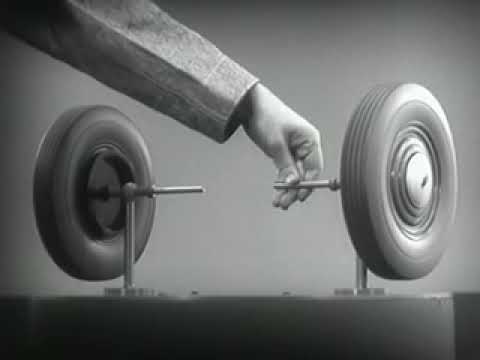
Around The Corner - How Differential Steering Works (1937)
US Auto Industry
 35:15
Heat Pumps: the Future of Home Heating
Technology Connections
 32:35
Detergent packs are kinda wishy-washy (Dishwashers Explained)
Technology Connections
 41:53
Mechanical Computer (All Parts) - Basic Mechanisms In Fire Control Computers
Excelsior10000
 18:28
The Antique Toaster that's Better than Yours
Technology Connections
 19:43
U.S. NAVY BASIC MECHANISMS OF FIRE CONTROL COMPUTERS MECHANICAL COMPUTER INSTRUCTIONAL FILM 27794
PeriscopeFilm
 11:39
The Ingenious Design of the Aluminum Beverage Can
engineerguy
4 comments from Hacker News
We do know, here is the paper that the journalist refers to: [LINK] And here is a great video by the author: [VIDEO] Short answer: "a bicycle should turn into a fall."
[1] Explanation of the research in question behind this article, as well as a demonstration of the bike they based the research on. They very clearly describe (at the end of the video) that even with gyroscopic and tracking forces removed, the two most important factors are where the center of gravity is, and the tendency to turn into a fall (arguably just the second, but it is caused by the location of the center of gravity with regards to the pivot). [1] [VIDEO] Edit: more info on the TMS (two-mass skate) bike at its wikipedia page: [LINK]
I don't think either of us understands that experiment. Fortunately, actual engineers have proven that bicycles don't stay upright from gyroscopic effects. [0] [1] If you want to experiment, try riding a bike that can't be turned. You might want to wear a helmet for that one. [0] [LINK] [1] [VIDEO]
There was still active research into why bicycles are stable as recently as 2011. Here's a talk about that research: [VIDEO] If the bicycle was some sort of "obvious" machine, people wouldn't still be studying the basic stability mechanics 200 years later. Very few things are as simple as they seem. Even levers can get a bit complicated.