Building Prototypes Dan Gelbart part 18 of 18 Design
Dan Gelbart2 HN recommenders · 2015–2024
99K views · lecture · evergreen · Uploaded 2013-02-04
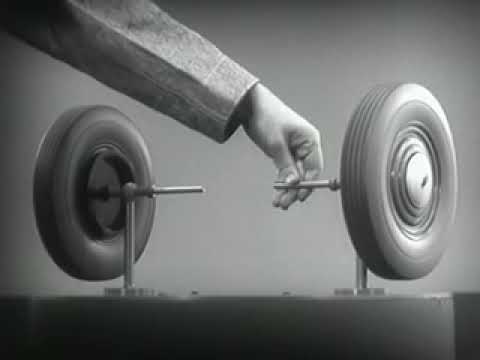
The final part of Dan Gelbart's 18-part Building Prototypes series, focused on mechanical design. It opens with a demonstration of stiffness and covers practical design principles for prototype machines.
HN recommends it, and the whole series, for practical mechanical design insight such as how structures achieve stiffness.
 9:31
Around The Corner - How Differential Steering Works (1937)
US Auto Industry
 32:35
Detergent packs are kinda wishy-washy (Dishwashers Explained)
Technology Connections
 41:53
Mechanical Computer (All Parts) - Basic Mechanisms In Fire Control Computers
Excelsior10000
 18:28
The Antique Toaster that's Better than Yours
Technology Connections
 19:43
U.S. NAVY BASIC MECHANISMS OF FIRE CONTROL COMPUTERS MECHANICAL COMPUTER INSTRUCTIONAL FILM 27794
PeriscopeFilm
 11:39
The Ingenious Design of the Aluminum Beverage Can
engineerguy
 30:33
Origins of Precision
Machine Thinking
 19:45
Building a realistic artificial sun (for dark winter days)
DIY Perks
3 comments from Hacker News
Part 10 [1] of his prototypes series also features incredibly impressive precision. He starts off with a $10 piece of aluminum that took maybe an hour or two to make, and is completely accurate down to nanometers. I worked in a nanotech lab with an electron microscope, and the idea that you could make a mechanical device that could accurately move a few pixels on my screen blew my mind. I thought I was hot shit with all my electrons and magnets... nope. Dan's flexure is so sensitive that radiative heat from his hand moves the end stage 100x more than mechanical input. You could move it by shining a laser pointer at it. Insane. The final part [2] is also very neat, and starts with a really remarkable demonstration of stiffness. [1]: [LINK] [2]: [VIDEO]
Bolting parts together is better because it means you can disassemble it for transport or maintenance. Perhaps surprisingly, this doesn't harm the performance. Lathes, and machine tools in general, are built for extreme stiffness, not extreme strength. Dan Gelbart has a very interesting demonstration showing how a weak structure can still have good stiffness: [VIDEO] The rest of this video series is also well worth watching.
it's a somewhat complicated comparison to make, but i think basically the answer is yes there's also a coincidental factor, though; wood is cheap where forests are abundant, and although having abundant natural resources such as arable land and wood doesn't guarantee wealth, exhausting your natural resources through deforestation and desertification virtually guarantees poverty. as for 'cheaper', well, the numerator is dollars, but what's the denominator? i would say it's 'house', but neither concrete nor wood is sold by the house; cement and sand and gravel and rebar are sold by the kilo, and wood is sold by the square meter. so we need some way to make them comparable one approach is to try to compute 'cost per strength', on the theory that a house's worth of materials is enough materials to be strong enough to work as a house. but there are two different kinds of strength involved here. floors and roofs must resist flexure without breaking, and materialswise, that mostly depends on the material's tensile strength. they also must resist impact loadings, which depends on tensile strength but also flexibility: a more flexible floor can elastically absorb a greater impact energy before reaching the same tensile strain, and a tougher material is one that has a higher elastic energy capacity in this sense. walls, on the other hand, mostly must resist compression from above, and typically this mostly depends on their ability to resist buckling, not their material compressive stre