Spinning Levers - How A Transmission Works (1936)
US Auto Industry5 HN recommenders · 2018–2026
11.5M views · explainer · evergreen · Uploaded 2012-09-11
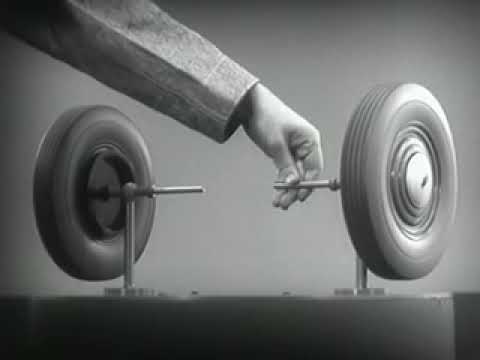
A 1936 Chevrolet-sponsored film that explains how a car transmission works by treating gears as spinning levers. It uses physical models to make the mechanism clear.
It is held up as a model of clear, well-paced educational film and of the old-era instructional style.
 9:31
Around The Corner - How Differential Steering Works (1937)
US Auto Industry
 32:35
Detergent packs are kinda wishy-washy (Dishwashers Explained)
Technology Connections
 41:53
Mechanical Computer (All Parts) - Basic Mechanisms In Fire Control Computers
Excelsior10000
 18:28
The Antique Toaster that's Better than Yours
Technology Connections
 19:43
U.S. NAVY BASIC MECHANISMS OF FIRE CONTROL COMPUTERS MECHANICAL COMPUTER INSTRUCTIONAL FILM 27794
PeriscopeFilm
 11:39
The Ingenious Design of the Aluminum Beverage Can
engineerguy
 17:08
Cities Aren't Loud: Cars Are Loud
Not Just Bikes
 30:33
Origins of Precision
Machine Thinking
9 comments from Hacker News
Lately, because of a car situation, I've been watching car mechanic videos online. There's some old videos, like 1937 old, made by Chevrolet, that explain really well how different mechanics of a car work. One explains a transmission starting from levers[1], how they work to give mechanical advantage, and how gears are basically spinning levers. I ended up feeling like I could make a basic transmission if I only knew how to make metal pieces in the shapes I want. From there I've been looking at people disassembling automatic transmission and explaining the different parts. I gotta say, learning how these machines work mechanical advantage to something so convenient has really raised my interest in physics and mechanical engineering. I don't remember simple machines[2] being something so interesting back in physics class. I don't blame the teacher, 'cause she was always enthusiastic about physics. I wonder why this is more interesting now than then. It's probably just that, now that I'm older, I can understand complex applications of those fundamentals being taught at school. [1] [VIDEO] [2] [LINK]
The editing, pacing, and style were better. Educational videos today tend to go to one of two extremes. Either they're a talking head with PowerPoint, like most of the "massively online" courses. Or they have way too many jump cuts, like theatrical movies which want your attention, not your understanding. There's also an annoying tendency to have distracting music and irrelevant graphics during narration. Here's an old Jam Handy film, "Spinning Levers", on how a transmission works.[1] There's a whole series of these Chevrolet films on the Internet Archive, covering major vehicle systems. Things to note: - There's a narrator and a demonstrator. We never see the narrator, and the demonstrator never talks. So the viewer can focus. - The demo models of parts are really good. They start with a simple version and add features until a full transmission has been built up. - There's some simple animation. Animation is used to point out how power flows through the gears. This is much clearer than someone using a pointer. - The editing and narration are very well synchronized. - There's an entertaining part at the beginning and end, so you don't feel like they're beating you over the head with the boring stuff. [1] [VIDEO]
sigh If I don't post it someone else will. Here's the spinning levers video you've all already seen a million times: [VIDEO]
A couple of other examples: an old US Army training video on the workings of various categories of firearms [0], and an old video on how transmissions work [1]. Both make great use of physical models of the mechanisms. [0] [LINK] [1] [VIDEO]
Similar videos about cars: Chevrolet Suspension (1938): [LINK] How Differential Steering Works (1937): [LINK] How A Transmission Works (1936): [VIDEO] And as a bonus, an explanation about transistors from 1953: [LINK]
All of the old US gov't/mil funded education films are pretty good. * [LINK] * [VIDEO] * [LINK] * [LINK] * [LINK] Etc.
I get a similar feeling looking at instructional videos from that era[0][1], or reading books like Stick and Rudder[2][3], or even the simple brilliance of the visual design of the London Underground[4]. There's a pervasive sense that despite the reams of progress that has been made in the science of human factors, simple straightforwardness is becoming an endangered species. [0] [VIDEO] [1] [LINK] [2] [LINK] [3] [LINK] [4] [LINK]
This old training video is great too, it also mentions the idea touched upon in the article that gear teeth are levers: Spinning Levers - How A Transmission Works (1936) [VIDEO]
I think this “awesome”, “amazing”, “super exciting” phase came much later than the moon walking era. Remember it’s been over 50 years since humans walked on the moon. Much has changed. See these old videos, where people talk in a straightforward way: Car transmission [VIDEO] How to dial your phone [LINK] The dial comes to town [LINK] Now go watch that Apple video again and you’ll see what I’m talking about.