How does a Bowling Pinsetter Machine work? (Brunswick GS-X)
Jared Owen4 HN recommenders · 2023–2026
7M views · explainer · evergreen · Uploaded 2021-05-05
Jared Owen's 3D animated breakdown of how a Brunswick GS-X bowling pinsetter works, showing its mechanisms for sweeping, lifting and resetting pins and balls.
HN recommends it as an exceptionally well-made explainer of complex mechanical machinery.
 9:31
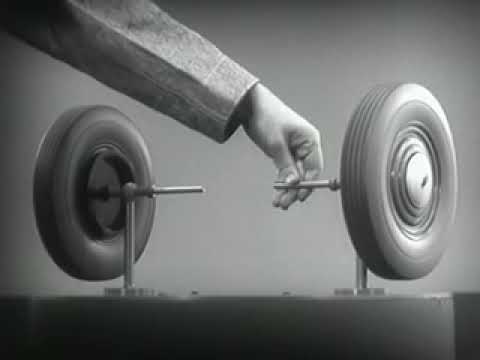
Around The Corner - How Differential Steering Works (1937)
US Auto Industry
 24:26
The Beauty of Bézier Curves
Freya Holmér
 32:35
Detergent packs are kinda wishy-washy (Dishwashers Explained)
Technology Connections
 41:53
Mechanical Computer (All Parts) - Basic Mechanisms In Fire Control Computers
Excelsior10000
 54:11
Ed Catmull, Pixar: Keep Your Crises Small
Stanford Graduate School of Business
 18:28
The Antique Toaster that's Better than Yours
Technology Connections
 19:43
U.S. NAVY BASIC MECHANISMS OF FIRE CONTROL COMPUTERS MECHANICAL COMPUTER INSTRUCTIONAL FILM 27794
PeriscopeFilm
 11:39
The Ingenious Design of the Aluminum Beverage Can
engineerguy
6 comments from Hacker News
I think they've been improving them incrementally over the years, but it's a monstrously difficult engineering problem to do the following: - Set up all 10 pins reliably and in the same spots - Lift remaining pins after the first throw and sweep away the ones knocked down, if any - Load extra pins into a holding area to make re-racks faster - Other things I'm not thinking of I encourage you to view this 3d breakdown of how a pinsetter works on YouTube: [VIDEO]
I recommend watching a video[1] about how these things work. I really don't see how it's feasible to make this complex, heavy machine inherently safe to stick your arms in. And keep in mind these machines have been iterated on for 100 years or more by multiple companies. Modern ones are full of safety features, but they revolve around lockouts, not making everything so weak it can't hurt you. [1] [VIDEO]
Take a look at a video of a pin setting machine in action - [VIDEO] , for example. Basically, it's not just the force to move a single 1.5 kg pin. It's the force needed to move ten of those pins, plus the machinery for lifting and setting them into place, all of which needs to be overbuilt because it's being repeatedly hit by flying pins and possibly even the occasional ricocheting 7kg ball, and needs to stand up to that kind of treatment day in, day out for years or decades without completely falling apart. And then, because people like their games to keep moving, the drive mechanism for moving that whole huge assembly around needs to apply enough force to be able to raise and lower it quite quickly. I'm no expert in any of this, but just taking one quick look at it I'm not at all surprised to find out that these machines are invariably hazardous. And probably most the ones in operation are even scarier than the one in that video I linked above, because it's a relatively recent model and, at least at the place I have been bowling, all the equipment looks like it could easily be older than I am. If you want a system that only needs to be able to apply enough force to lift a single 1.5kg pin, well, it sounds like that's why the string setting machine was invented.
Check out Jared Owen's explainer 3D videos on Youtube. some of the best I've ever seen, and relatively recent. Example: [VIDEO]
Not from the same Youtuber but that video reminded me of another great one about how mechanical bowling alley machines work: [VIDEO]
In the US tethered pins with cords aren't really a thing, instead most bowling alleys use mechanical pinsetter machines. These machines are large, complex, and expensive (see here for a video on how they work: [VIDEO] ) which is why he's talking about the equipment being 70+ years old- with the revenues most bowling alleys make, it's not economical to replace a pinsetter instead of maintaining the current one. This also means that the alley needs to have a mechanic on staff to keep the pinsetter running smoothly. The way the machines detect the pins is still fairly simple. The assembly that puts the pins into place moves down after the ball is thrown, and has sense switches above each pin that detect which pins are still standing.