Old pinball machines are amazingly complex
Technology Connections6 HN recommenders · 2023–2026
3.5M views · explainer · evergreen · Uploaded 2023-10-14
Technology Connections takes a long, detailed look at how a 1970s electromechanical pinball machine works, from relays to stepper motors and mechanical logic. It is the first part of a series.
HN points people to it as a deep dive showing how complex logic was built without computers.
 1:25:34
8 Bit & '8 Bitish' Graphics-Outside the Box
GDC Festival of Gaming
 28:03
AT&T Archives: Similiarities of Wave Behavior (Bonus Edition)
AT&T Tech Channel
 9:31
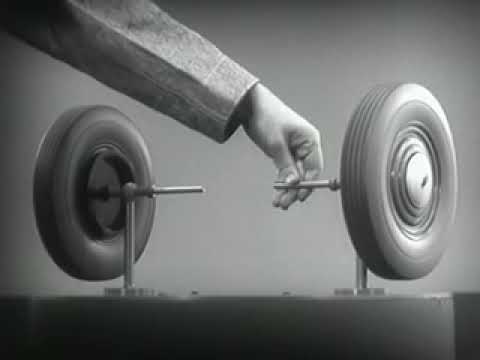
Around The Corner - How Differential Steering Works (1937)
US Auto Industry
 6:53
8-bit computer update
Ben Eater
 22:21
Reverse emulating the NES to give it SUPER POWERS!
suckerpinch
 27:25
“Hello, world” from scratch on a 6502 — Part 1
Ben Eater
 32:35
Detergent packs are kinda wishy-washy (Dishwashers Explained)
Technology Connections
 41:53
Mechanical Computer (All Parts) - Basic Mechanisms In Fire Control Computers
Excelsior10000
11 comments from Hacker News
I was watching a video [1] about pinball machines the other day and thought about creating a pinball using my "physics engine" [2]. I was able to create a simple billiards [3] game using it. I've been pretty busy with work and other personal projects, but I've been meaning to get back to program for fun. 1 - [VIDEO] 2 - [LINK] 3 - [LINK]
Technology Connections very recently put out a walkthrough of relay-based logic as it applied to a pinball machine: [VIDEO]
This video from Technology Connections on old mechanical pinball machines does a great job of explaining how a lot of this stuff can be done mechanically. Re: your for loop question, check out how they handle the scoring and I think it'll give you some ideas. [VIDEO]
I've been watching his videos on a 1970s pinball machine. It goes horribly in-depth (in a good way). Fascinating how much complexity could be managed with the simplest of interfaces. [VIDEO] [LINK]
You still use paper. Instead of writing the game in a general purpose programming language you write it using logic gates. You get abstraction and modularity by designing larger components (adders, flip-flops, timers, shift registers) on separate pieces of paper and then including them as named black boxes in a higher-level diagram. The good news for the Pong developers is that most of those larger components were already available off-the-shelf. Common families of these chips, such as the venerable 4000-series and 7400-series logic families, began to appear on the market in the mid-1960's. Edit just to add another bit of nuance . If it still seems like an extremely difficult task without much precedent, I think the lineage of these early arcade games can be traced back through their older arcade siblings: pinball machines. People had been building more and more sophisticated pinball machines over the decades since their inception in the early 1930s. For a look into pinball machines, some of their history, and an amazingly deep dive into the workings of a 1970's model, check out Alec's pinball series on Technology Connections [1]. [1] [VIDEO]
How were pinball machines built without a programmable computer? [VIDEO] I think the arcade industry was already comfortable dealing with complexity to make the mechanical games. The Rube Goldberg nature of the early video games probably weren't that much of a jump in effort/engineering.
Related - Technology Connections has several videos about old pinball machines that showcase how incredibly complex they are, here's the first video: Old pinball machines are amazingly complex [VIDEO]
I think it's pretty charming. Games have so much abstraction these days it feels like there's no way to truly understand what it is they're even doing. One can spend months agonizing over the true nature of things and how ideas and concepts relate to each other and eventually distill it all into some object oriented organization that implements not just your game but all possible games. One can also just cycle the game's state machine in a big function, haha switch statement go brrr. Reminds me of the old NES games which would statically allocate memory for game objects, very much in the "structure of arrays" style, they too had game logic just like that. Also reminds me of old electromechanical pinball machines. You can literally see the machine cycle. [VIDEO] [LINK]
YT recently recommended his explanation of how pre-computer pinball machines worked to me - a series of 3, hour-long videos. Gave me something to look forward to on my commute. I shared it with everyone I know, and now I'm sharing it with you: [VIDEO] Fascinating (and insanely impressive) to see how a bunch of switches and stepper motors implement complex logic.
The Rotary Switch - which is both input and output in the real Minivac - is absolutely wild yeah. One of the crucial things I didn't get to yet is making that wheel controllable - some circuits in the manuals do require you to turn it. That's high in the todo list (with mobile support). I also really want to share all of the videos I've been collecting of similar "wheels" - in (modern-ish) elevators [0] and light shows [1]... And also pinball machines! [2] Re: RadioShack boards, I did have the "300 in 1" kit growing up, so yes... it's full circle for me. :-) [0] [LINK] and [LINK] [1] [LINK] [2] [VIDEO]
I would have loved seeing this as a kid. I was obsessed with wanting to build a pinball machine when I was young. At the time my skills only stretched as far as cardboard builds with elastic band bumpers and pencils for flippers, but I got a huge kick out of making different layouts for the balls to travel around. It would be great to see some home made efforts now with so many amazing off the shelf bits of tech and 3D printers. The site is also a nice compliment to the Technology Connections series on old pinball machines [1]. 1. [VIDEO]