RSA ANIMATE: Smile or Die
Royal Society of Arts3 HN recommenders · 2011–2022
2.5M views · explainer · evergreen · Uploaded 2010-03-17
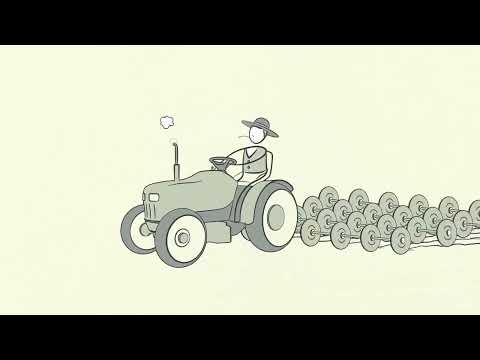
An RSA Animate drawing of Barbara Ehrenreich's talk on the darker side of positive thinking. It argues that forced positivity in culture, work and policy can be harmful and played a part in the financial crisis.
HN uses it as a go-to short critique of mandatory positivity in workplaces, startups and corporate culture.
 57:15
1. Introduction to Human Behavioral Biology
Stanford
 31:00
How The Economic Machine Works by Ray Dalio
Principles by Ray Dalio
 2:51:44
Essential Ideas for Parents
Jason Salotti
 3:54:44
The Century of the Self (Full Adam Curtis Documentary)
David Lessig
 4:48
Hans Rosling's 200 Countries, 200 Years, 4 Minutes - The Joy of Stats - BBC
BBC
 58:51
DON'T PANIC — Hans Rosling showing the facts about population
Gapminder Foundation
 44:02
Music Theory and White Supremacy
Adam Neely
 1:16:27
Randy Pausch's Last Lecture: Achieving Your Childhood Dreams
Carnegie Mellon University
12 comments from Hacker News
My issue wasn't with the "retarded" line, actually; I was more concerned by this: "If someone says something negative about your project in an unreasonable way, don’t take it to heart. There’s something good in every project (it’s open source, it already has one thing going for it), no single project is complete crap, keep the good things and learn from the criticism. All this boils down to basically 'surround yourself with good people.'" This is the kind of thinking that lets people write bad code. "Unreasonable" is subjective here and lets people be very thin-skinned and defensive about their code. There is code which is complete crap and serves only as a warning to others to pay heed, lest they write code just as bad. (Feel free to consider that hyperbolic and point out that "complete" and "serves only as" are contradictory.) It's fine to surround yourself with "good people," who I presume are people that are Good-aligned, but that's never going to reveal systemic weaknesses or flaws in your code; you're just going to end up as another group of people that relies on black hats to point out where your code was flawed. In other words, this entire post feels like thinly veiled positive thinking in excess. See [VIDEO] for a much better summary of the problem.
There is a dark side to overly positive thinking. I'd settle for mostly positive with reservations and open discussion. [VIDEO]
1. It's not always true that things that are more expensive are also higher quality. But the reverse is true: things of higher quality are more expensive. Because they're made of better materials, because they were grown naturally, because they were made of natural ingredients, because they were tested... better stuff is usually made with more effort or better material. 2. Because of #1, distinguishing genuine high quality stuff from a simple ripoff takes critical thinking. People don't like thinking too much, don't like analyzing, and critical thinking is unpopular especially in United States of America. [VIDEO]
I disagree. The reason why we are often too eager to dismiss is because kindness takes effort. Empathy, and certainly sympathy, is hard work. We get lazy, we become exhausted and our reactions become snappy. Almost always the "dry your eyes" advice is inappropriate and insensitive. And it never really achieves its intended objective. I'm not saying we should all participate in crying orgies whenever someone shows signs of weakness (though, as I've aged, I think that is better than showing a cold shoulder) or that we readily invest in "idiot compassion". What I'm saying is: we are all trapped in this existential reality together and we all need to show kindness with all forms of suffering. Being cruel to be kind as a philanthropic philosophy has never worked (for me). Watch this: [VIDEO] (RSA Animate on "Smile or Die" a talk by Barbara Ehrenreich)
RSA Animate - Smile or Die [VIDEO] Touches on the same idea of those who are anti authoritarian being sidelined without reason, and enabling and exacerbating the recent global financial crisis.
I'm sorry, I'm all in favour of loving what you do and agree that this generally leads to good results, but that interpretation frames the sentence in a completely different context than the original story, which is the following: > So fundraising is a psychologically trying experience that depends very little on any sober analysis of the quality of your product Smile or die, motherfucker! [VIDEO] > It's unquestionable that you need energy, excitement and confidence to be good at something. Anything from being a doctor, lawyer to professional athlete. Oh, that is VERY questionable. The first two are focussing on positive emotions and ignore the important role negativity plays. Smilarly, confidence does not in any way equate capability . > Projection (The act of projecting or the condition of being projected.) is going to be the only thing people can fall back on. No, that's just our intuitive mind being too lazy to do a rigorous analysis of the situation. I recommend "Thinking Fast and Slow" by Kahneman to fix this.
The points covered about "postive-thinking industry" are also brought up and elaborated on in the RSA Animate: Smile or Die[0] I can't speak for all Influencers authors but Jeff Weiner in particular has a great and realistic commentary style while speaking person and to the employees at LinkedIn. It's a shame as I read the both "Managing Compassionately" and "Three Pieces of Career Advice That Changed My Life" that neither has the same impact compared to hearing those points as answers to difficult questions. As a fan of the slow-web I would like to see Influencer articles find a sweet spot between timely and long-form. For example, a lot of the posts give good information but don't weave that information into a memorable narrative of when and how to apply said advice. [0]: [VIDEO]
The TED talk "Smile or Die" explains problems arising when positivity is used as corporate or government policy. [VIDEO]
As a writer of critical comments of "hacker" school, I think this is typical of the times. If you call out somebody you are dismissed as a debbie-downer, cynical asshat, or other things like that. This comes from a culture now dominated by PR/marketing/sales, getting crazier by the growing viral marketing and astroturfing craze. I strongly recommend you to watch Smile or Die, a talk by Barbara Ehrenreich. [VIDEO] The parallel with that is a delusion SOLD to the community. In the case of "hacker" school I criticize it as I did with the "MBA" program by Seth Godin. And I consider that I might be _completely_ wrong in both cases, but what is telling is how aggressive people got with me for speaking up my opinion.
> when you got fired, it was called “graduation.” "Smile or Die" (RSA Animate) [VIDEO] This seems to be a variation on the Wall Street style of magical thinking.
> wage laborers are forced to wear a mask of positivity RSA Animate made a short animation about how a culture of forced positivity in white color jobs, and how it contributed to the late-2000s financial meltdown. "Smile or Die" [VIDEO]
> based on their facial expression Phrenology is still pseudo=scientific bullshit even when the calipers[1] are replaced with an "AI" black box of software. > Just need software that punishes employees who aren't happy enough at work, then we'll have a proper nightmare. "RSA ANIMATE: Smile or Die"[2] [1] [LINK] [2] [VIDEO]