Shakespeare: Original pronunciation (The Open University)
OpenLearn from The Open University4 HN recommenders · 2013–2025
5.6M views · explainer · evergreen · Uploaded 2011-10-17
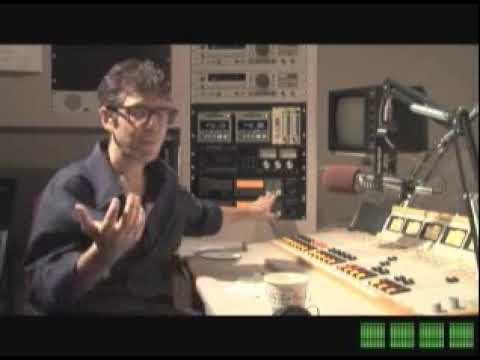
David and Ben Crystal introduce the Original Pronunciation production of Shakespeare and show what it reveals about the history of English, including puns and rhymes lost in modern speech.
Frequently linked as a short, accessible demonstration of how Shakespeare actually sounded.
 1:21:52
LEADERSHIP LAB: The Craft of Writing Effectively
UChicago Social Sciences
 58:58
George Lakoff: Moral Politics
University of California Television (UCTV)
 8:06
The Egg - A Short Story
Kurzgesagt – In a Nutshell
 1:27:37
DOUGLAS ADAMS: Parrots, the Universe and Everything
University of California Television (UCTV)
 5:21
Ira Glass on Storytelling 3
warphotography
 6:34
Stephen Fry Kinetic Typography - Language
Built By Matt
 1:16:55
LEADERSHIP LAB: Writing Beyond the Academy 1.23.15
UChicago Social Sciences
 17:37
Kurt Vonnegut, Shape of Stories (subtitulos castellano)
Eva CollinsAlonso
20 comments from Hacker News
A bit OT but hopefully interesting nevertheless. This is apparently the original pronunciation for the works of Shakespeare [VIDEO] The entire video has some nice information but if you want to skip to an example of the original pronunciation, you can jump to 2:50.
Just for future reference, if you right click on a video on youtube, you can click copy link at current time to lazy link to 2m50s so you don't have to say "jump to this time." [VIDEO]
Sure. For example [VIDEO] 00:04:36, states that film is spelled philome in Shakespeare's work. Unfortunately a google search of "philome" yields only pages about shakespeare pronounciation, especially by these two guys; I don't know what that means. However, I think that thinking about the evolution of a language as a linear progression is misleading. Is certainly possible that modern Irish pronunciation stems from what was spoken at that time, and the modern "mainstream" english pronunciation evolved later from a slighly different root, and epenthesis acted only in one of the two branches. Film derives from west germanic filminjan, which in turn comes from proto germanic fello(m), and proto indoeuropean pel-, with cognates in lating and greek, pella and pellis respectivly. So it's possible that epenthesis was applied on top of filminjan in irish scottish accents (possibly due to pressure of the gaelic substrate), while the dialect which originated RP didn't have this change. I'm sure somebody with better knowledge of the matter can be more precise about that, however, it's strange how little (and often more misleading than uncertain) information is there about one the most widely spoken languages. (Sorry, if I had more time, I would have written a shorter comment :-) )
Most of English's "problems" come from a sort of natural drift that all languages experience all the time. There's no way to freeze a language in its "most useful" form, because a billion different speakers are simultaneously pulling it in different directions. It either ends up as a sort of democratic consensus, or eventually fractures into mutually unintelligible dialects. 1. Shakespearean pronunciation: [VIDEO] 2. Problems that would be caused by simplifying spelling: [LINK] 3. Power of Babel: [LINK] 4. Toastmasters speech about "Manglish": [LINK] (Toastmasters has its own version of English, full of over the top gestures. Also recommended, search for Singlish on Youtube.)
I very much enjoyed this quick introduction to Shakespeare in Original Pronunciation (the sound of speech at the time) and how many puns and much interpretation is lost in modern accents. From the Open University: [VIDEO]
Funnily enough, some would argue that Shakespeare in modern English also isn't real Shakespeare! Check out the original prenounciation: [VIDEO]
There are companies which do original-pronunciation Shakespeare and make a point of showing wordplay and rhymes that don't exist in modern English pronunciation. This video has an example: [VIDEO]
It's not quite like that. American pronunciation change as well. Here's an example of how linguist reconstruct the original pronunciation of Shakespeare plays: [VIDEO] It really has more elements that sound like West Country accent, Irish English, or even Scots/Ulster Scots.
FWIW, the Shakespeare example used modern theatrical pronunciation. [VIDEO] shows the difference between that and the original pronunciation.
Judging by those spellings, we've also been pronouncing it wrongly. A pronunciation like "shax pear" does seem to have more of a early modern English ring to it. [VIDEO]
Ah, but with how English has shifted over the centuries, the necessary domain knowledge has slowly been disappearing. Shakespeare's plays now and then [0] are slightly different (and back then, dirtier) because of it. (Jump to 2:30 for an explanation and example, then at 7:58 is the dirty pun that doesn't exist in modern pronunciation.) [0] [VIDEO]
I do really wish more Shakespeare was performed in an original accent, as there's an awful lot of rhymes and jokes that don't work in modern pronunciation. Like "hour to hour" being pronounced like "whore to whore", which suddenly makes that line quite a bit funnier. Here's another video of the same bloke that I've seen in the past: [VIDEO] I do like that he mentioned being asked to perform using his native Welsh accent in the OP's video. Shakespeare was after all the playright for people of every standing, and it feels a bit daft to posh it all up.
I've seen Ben Crystal do some other Original Pronunciation Shakespeare videos. It's his specialty, and I would love to see one of his "original practice" productions live one day. Here's a couple more of his videos: [VIDEO] [LINK]
Newfanese is pretty much crystallized Hiberno-English, at least if we're talking the language of the bay wops rather than townies. It has a surprising amount of commonality with African-American vernacular, likely due to transportation and indenture (which is why AAVE, while distinct, barely edges into typical creole patterns). The English of Shakespeare's time, or at least of his plays, has been largely reconstructed by linguist David Crystal, whose son, the actor and director Ben Crystal, is probably the best-known practitioner. There are a number of videos on YouTube of Ben doing Shakespeare in OP. A good starting point is [VIDEO] - and if one had to tie it closely to a modern regional variant, it would be West Country. But that would just be something it would remind you of rather than a template.
The vowel shift is one of the major reasons why Shakespeare's poetry doesn't rhyme when spoken with modern English. There was a rather fascinating video that went around awhile back of a father and son demonstrating the changes.[1] [1] [VIDEO]
Along similar lines, some years ago I really enjoyed [VIDEO] as an introduction to the realities of the pronunciation of Shakespeare's English. Jump to 5 minutes in for a demonstration of how "lines" and "loins" were pronounced the same and resulted in a pun that's missed in modern pronunciation.
See also: about Shakespeare in the Early Modern English pronunciation: [VIDEO] Specifically how some puns don't work with the pronunciation of today, like the ‘hour’.
There are some renditions of Shakespeare's plays with pronunciations from where and when they were written. It recaptures some of the puns and jokes that are not apparent in most modern accents. [VIDEO]
The history of how we know what Latin sounded like is fascinating. Reminds me this video on what Shakespeare's original pronunciation sounded like: [VIDEO]
The idea that American spelling and pronunciation have a better heritage than British English is a compelling one, especially as the idea that Southern and Appalachian accents are closer to those of the Founding Fathers and Shakespearean English is a nice balance to the perception that these accents sound unintelligent and uneducated, but it's simply not true that one dialect has diverged more than another - both have diverged and in many cases substantially. One of the common reasons given is that British accents like RP (there's a lot to criticise about RP but that's another topic), Cockney (featured elsewhere on the thread and the internet in general, oi m8 you got a loicence for that?), and general loss of rhoticity in BrE (and some AmE) accents that are most represented in American media have diverged substantially, but to me the examples of Shakespearean English in classic pronunciation sound closer to the West Country accents than they do any American accent. Note that there could be some bias here as the speakers are British, but you get features like H-dropping which simply don't exist in AmE. It also wouldn't be fair to say any modern accent sounds even remotely close to this. Shakespearean English: [LINK] [VIDEO] Some good reddit threads on the matter: [LINK] [LINK] [LINK] Another weird one is spelling, given that etymology and spelling is pretty interesting in general, at least up until the advent of the printing press. Both BrE and AmE have made some questionable