What is Euler's formula actually saying? | Ep. 4 Lockdown live math
3Blue1Brown1 HN recommenders · 2020–2023
1.7M views · lecture · evergreen · Uploaded 2020-04-28
A 3Blue1Brown live lockdown math episode asking what Euler's formula e^(pi i) is actually saying. It builds intuition through exponentials, rotation and vectors landing on the unit circle.
HN recommends it as the explanation that makes complex exponentials click, especially for understanding the Fourier transform.
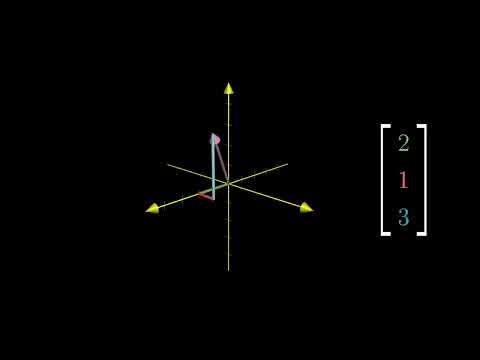 9:52
Vectors | Chapter 1, Essence of linear algebra
3Blue1Brown
 19:42
But what is the Fourier Transform? A visual introduction.
3Blue1Brown
 18:40
But what is a neural network? | Deep learning chapter 1
3Blue1Brown
 24:26
The Beauty of Bézier Curves
Freya Holmér
 1:13:50
The Continuity of Splines
Freya Holmér
 1:00:43
Jim Simons (full length interview) - Numberphile
Numberphile2
 39:49
Lec 1 | MIT 18.06 Linear Algebra, Spring 2005
MIT OpenCourseWare
 25:16
But how does bitcoin actually work?
3Blue1Brown
4 comments from Hacker News
True, but I don't agree with what he said here @ 8:00 [VIDEO] Is this really the case? I checked Wikipedia and MathWorld and nobody makes a distinction between e^x and exp(x). Even if it's a "white lie" for didactic reasons, I don't buy it, it will be much more confusing down the line for students. Math is about finding structures governed by some rules and then generalizing them. To me the e^x defined as repeated multiplication conceptually is the same thing as the exponential function, just over broader domain. Why? You can interpolate between integer-valued X's using geometric mean. e^3 = sqrt(e^2 * e^4). What stops you from interpolating this recursively to achieve in the limit the exponential function over real numbers?
I think that e^(i*pi) + 1 = 0 is massively overrated. Because the beauty that people find is largely based on the symbols that are present and because it doesn't really say anything meaningful beyond itself. It's not even a formula or an equation - it's a result. It's like being impressed by cos(pi) = -1. The more general formula e^(ix) = cosx + i*sinx is a lot more impressive. Both because of it's implications for the rest of mathematics and aesthetically. If you look at the way the vectors at 38:00-39:20[1] cancel out to always land on the unit circle - I can get behind calling that beautiful. [1] [VIDEO]
The key insight for me on this topic also came from 3Blue1Brown, but in a different video: it’s that e^x is NOT best thought of as repeated multiplication, but instead as the function exp(x) = 1 + x + x^2/2 + X^3/6 + x^4/24 + … After being relieved of the burden of that misconception, I was finally able to understand the role of complex numbers in the Fourier Transform. [VIDEO]
People told me that over and over but it didn’t help — because it didn’t make sense why repeated multiplication would cause rotation! Later in that video, we see a visualization of the rotation. I was able to grasp how the exp function could yield rotation where I’d never been able to understand why e*e*e*e… did. [VIDEO]