What does it feel like to invent math?
3Blue1Brown6 HN recommenders · 2016–2024
4.6M views · explainer · evergreen · Uploaded 2015-08-14
3Blue1Brown explores infinite sums from convergent to divergent, with an introduction to the 2-adic metric, themed on the cycle between discovering and inventing mathematics.
Recommended as a favorite Grant Sanderson video and a visual introduction to p-adic numbers and sums like 1+2+4+...
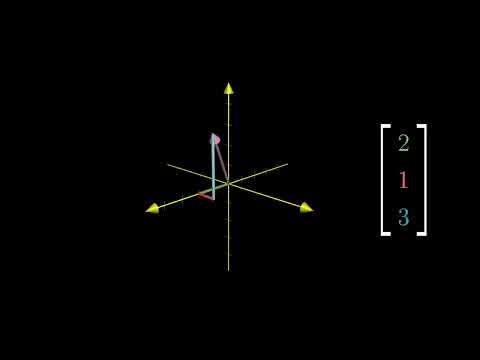 9:52
Vectors | Chapter 1, Essence of linear algebra
3Blue1Brown
 19:42
But what is the Fourier Transform? A visual introduction.
3Blue1Brown
 18:40
But what is a neural network? | Deep learning chapter 1
3Blue1Brown
 24:26
The Beauty of Bézier Curves
Freya Holmér
 1:13:50
The Continuity of Splines
Freya Holmér
 1:00:43
Jim Simons (full length interview) - Numberphile
Numberphile2
 39:49
Lec 1 | MIT 18.06 Linear Algebra, Spring 2005
MIT OpenCourseWare
 25:16
But how does bitcoin actually work?
3Blue1Brown
6 comments from Hacker News
I loved this video [VIDEO] "An exploration of infinite sums, from convergent to divergent, including a brief introduction to the 2-adic metric, all themed on that cycle between discovery and invention in math."
So many things I could say about this, but I"ll let Alan Kay speak for me - [LINK] Alan talks about how ideas in Calculus could be manifested from an early age and a richness in understanding built up as they aged up: - at very young ages, kids really respond well through "doing" / the enactive channel. When asked to draw a circle, kids in Papert's group would first emulate what a LOGO turtle would do by rotating their body in a circle (making tiny increments in x and y). - as they got a bit older, the visual / iconic channel was more developed and they could understand the abstraction of a circle on pencil/paper and how the concepts carried over there - closer to early teens, symbols were much easier to grasp and relate to, etc. With this context in mind, there have been some cool efforts to mix the second and third channels I just mentioned to communicate advanced math concepts. Vi Hart and Grant Sanderson's youtube channels come to mind. Here are my favorite videos by Grant: - "What does it feel like to invent math": [VIDEO] - On the visual intuition behind a hard problem on the Putnam exam - "The hardest problem on the hardest test": [LINK] - From vectors to matrices to vector spaces to higher-level ideas like the link between linear algebra and calculus: "Essence of linear algebra" series: [LINK] What I especially like about Grant's videos, is that he often walks through what a mathematician would do, the questions she would ask, etc.
3lue1brown has a great visualization of constructing p-adic numbers and calculating their metric through the lens of 2-adic numbers: [VIDEO] This article fills in some bits omitted from the video: [LINK]
You add infinite number of positives numbers to each other and you get -1 as a result. p-adic numbers are adding some sense to this seemingly contradictory result. Great intro: [VIDEO]
It's also not a full introduction, but for those who want to have a taste of p-adic numbers, see 3b1b's video [VIDEO] which motivates 2-adic numbers. There's also a neat connection between twos complement and 2-adic numbers.
3blue1brown has an earlier, kind of meta, video about “What does it feel like to invent math?” where Grant tries to show how one might invent, and so by define, p-adics. Complete with the customarily excellent visual aides. [VIDEO]