The essence of calculus
3Blue1Brown10 HN recommenders · 2017–2025
11.9M views · course · evergreen · Uploaded 2017-04-28
The first video of 3Blue1Brown's Essence of Calculus series, which builds toward integrals, derivatives, and the fundamental theorem of calculus from a simple geometry question. It aims to make viewers feel they could have invented calculus themselves.
A staple recommendation for anyone learning math, praised for visual intuition that makes memorized formulas make sense.
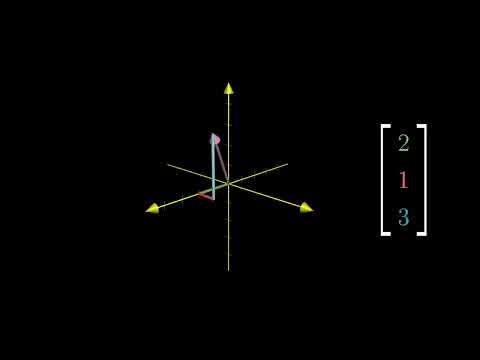 9:52
Vectors | Chapter 1, Essence of linear algebra
3Blue1Brown
 19:42
But what is the Fourier Transform? A visual introduction.
3Blue1Brown
 18:40
But what is a neural network? | Deep learning chapter 1
3Blue1Brown
 24:26
The Beauty of Bézier Curves
Freya Holmér
 1:13:50
The Continuity of Splines
Freya Holmér
 1:00:43
Jim Simons (full length interview) - Numberphile
Numberphile2
 39:49
Lec 1 | MIT 18.06 Linear Algebra, Spring 2005
MIT OpenCourseWare
 25:16
But how does bitcoin actually work?
3Blue1Brown
11 comments from Hacker News
[VIDEO] check out this series (he also has a really good one on linear algebra) After that, I'd check out Khan academy.
+1 And definitely follow through his "pause and ponder" sections. If you want to build up your maths skills, it is crucial to learn how to think in the maths way. Like becoming a good programmer involves writing lots of code yourself, or to become a good dancer you need to practice your steps. For maths it's abstract thinking. Appreciation of maths is one thing, having the discipline to self-study a whole other. Edit. Regarding your 2nd Edit: His videos are made for the broadest audience possible. I'd recommend picking any video whose topic interests you the most at the moment. You will see what knowledge you lack (take notes of these!) and can expand from there. Be it to watch his maths fundamental ((1)) series [0],[1] or just rewatch. ((1)): As in any other things, knowing your fundamentals is significant to the understanding of a topic. It won't help you at all if you can apply (copy paste) some machine learning techniques if you don't know about linear algebra at all. [0]: [LINK] [1]: [VIDEO]
Grant (the 3Blue1Brown guy) has an uncanny ability to explain difficult concepts and the fundamental intuition behind them. In many of his videos, he explains topics from the perspective of a person inventing that topic (such as in his first Calculus video [1]). I can't recommend his videos enough. [1] [VIDEO]
I know of no better way to both learn, truly understand, and enjoy calculus than the visual approach of 3Blue1Brown in the Calculus series of videos: [VIDEO]
Well, there's always 3Blue1Brown: [LINK] Take a look at his course, Essence of Calculus: [VIDEO] I'm not fluent in math, but I find it fascinating to watch, for some reason. NancyPi is also great: [LINK] Oh, and don't forget the Mathologer: [LINK] What a great guy! While I'm at it, go watch Numberphile too: [LINK] Is there anyone I forgot? :D
To answer your main question - "what level of maths" do you need is more about what topics: a couple introductory classes in Calculus, Linear Algebra, and Discrete Mathematics will make that sentence understandable. I'll give some definitions and resources, but think about how you would explain multiplication/division/algebra to a kid. At some point, you just have to work through some problems and the math just makes sense. So I'll explain the terms above, but best bet is to just take a few courses on the topics I mentioned above. Quick definitions: - Exponential: is the constant e to the power of some number. e, like pi, is a ubitiqous constant in mathematics and nature. You run into pi when doing geometry, and e when doing calculus. - A function in mathematics is similar to a function in programming, but not exactly. A course in Discrete Mathematics helps here. - F-apostrophe is notation used in calculus to show the relation of one type of function, called a derivative to another. f and f' are related. How, though, is better explained by taking calculus. - An eigenfunction exists in a system of equations. Think of it like a 'balance' point. Linear Algebra will help make sense of this term. Resources - Essence of Calculus: [VIDEO] - Essence of Linear Algebra: [LINK] Those 2 video's will do a good job of giving you the 'intuition' behind Calculus and Linear Algebra. Like programming, though, you just have to actually work some problems out by hand for the stuff to sink in. Fo
I would recommend watching 3Blue1Bown series on calculus. Its very easy to understand and somes with some great visuals. [VIDEO]
I took all the advanced math classes available to me in high school. This was despite me hating school and being a terrible student. But I enjoyed math as puzzles to solve. This was until I got into calculus. The teacher didn't have a strong grasp of the subject and more importantly it was just memorizing calculus formulas instead of understanding any sort of real-world application. In contrast, my AdMatics (advanced math and physics) class had us doing real-world physics based experiments. The application of the tools was immediately obvious. If I had a calculus lesson that broke down the problem space like this ( [VIDEO] ) I probably wouldn't have stopped my formal education in math at that point. When I discovered that video, all the formulas they tried to make me memorize started making a LOT more sense.
Khan Academy is great, but there are also an incredible number of great youtube videos. I would watch this 3blue1brown video to see if you like his style : [VIDEO]
Mostly [VIDEO] and Khan Academy I just use YouTube a lot and ChatGPT a lot too. ChatGPT is a pretty okay tutor at high school / early college level math
> This was boring to most students as they had no clue why the formalism was invented in the first place. > The history of how concepts were invented for the problems faced is far more motivating to students to build a mental model than canned capsules of knowledge. That's something I really like about 3blue1brown, and he says it straight up [0]: > My goal is for you to come away feeling like you could have invented calculus yourself. That is, cover all those core ideas, but in a way that makes clear where they actually come from, and what they really mean, using an all-around visual approach. [0]: [VIDEO]