IIHS Pedestrian Autobrake Tests – Audi, Ford, Hyundai, Kia, Mercedes-Benz, Nissan, Subaru
The Wheel Network0 HN recommenders · 2020–2021
1.7M views · news · dated · Uploaded 2019-10-31
Footage of IIHS tests of pedestrian automatic emergency braking on 16 midsize cars, with ratings from superior to basic or no credit.
HN references it as evidence that pedestrian-detecting emergency braking is routinely tested by independent agencies.
 9:31
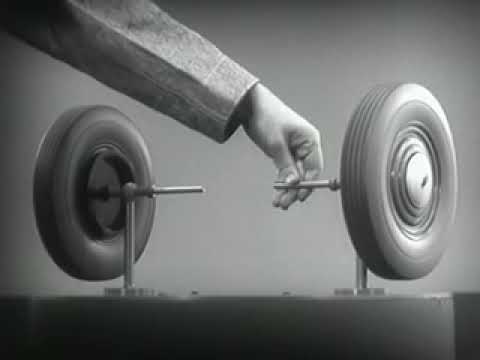
Around The Corner - How Differential Steering Works (1937)
US Auto Industry
 17:08
Cities Aren't Loud: Cars Are Loud
Not Just Bikes
 48:10
Bay Area Vision Meeting: Unsupervised Feature Learning and Deep Learning
Google TechTalks
 41:18
"Voice Driven Development: Who needs a keyboard anyway?" by Emily Shea
Strange Loop Conference
 30:09
Andrej Karpathy - AI for Full-Self Driving at Tesla
Matroid
 2:35:53
Tensorflow and deep learning - without a PhD by Martin Görner
Devoxx
 9:31
How Differential Gear works (BEST Tutorial)
ConceptVBS
 15:12
JPEG DCT, Discrete Cosine Transform (JPEG Pt2)- Computerphile
Computerphile
4 comments from Hacker News
The IIHS does all sorts of autonomous braking test scenarios involving pedestrians - [VIDEO] A pedestrian darting out from behind a car is known to be a tricky scenario, but some systems handle it at least some of the time. This scenario looked like the pedestrian was unobstructed and traveling in a predictable direction, so it’s pretty unnerving if it’s real. Long story short, even in Teslas, even just autonomous braking and crash avoidance is a great extra safety layer, but far from something that should be relied upon. Tesla is reckless for selling it as something that can be relied upon to successfully pilot a car.
There are some newer cars with AEB that have pedestrian detection, though. You can watch videos of IIHS testing those features [0]. It's not a perfect solution but will automatically brake if a collision with a pedestrian (or other VRU) is predicted and the driver is not braking. [0] [VIDEO]
These systems do work and have worked for years. They are also regularly tested by IIHS. See, for example: [VIDEO] And Teslas at least used to do this too: [LINK] If they no longer stop reliably to avoid hitting stationary objects, this is a serious problem that needs to be corrected.
Nearly every major manufacturer has a separate emergency stop system that continually looks for an obstacle in the vehicle's path and applies braking force, overriding the driver and any cruise control or self-driving that is in use. These often use RADAR, have worked for years, and are routinely tested by international agencies such as the IIHS. See, for example: [VIDEO] Teslas at least used to do this too: [LINK] [LINK] If Teslas no longer have this functionality, is a serious problem that needs to be corrected. That could mean reprogramming existing cameras or adding a sensor if the system really did rely on the now-removed RADAR.