Making Infrared Cooling Paint From Grocery Store Items (w/Novel CaCO₃ Microsphere Synthesis)
NightHawkInLight5 HN recommenders · 2023–2026
1.3M views · tutorial · evergreen · Uploaded 2023-07-01
NightHawkInLight shows how to make radiative sky cooling paint from grocery and hardware store materials, including a novel calcium carbonate microsphere synthesis. The paint can cool a surface below ambient air temperature in direct sunlight without electricity.
It comes up whenever radiative cooling coatings are in the news, as a hands-on DIY guide that shows the approach working with household materials.
 32:35
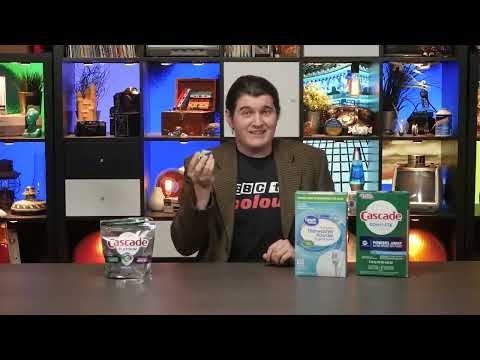
Detergent packs are kinda wishy-washy (Dishwashers Explained)
Technology Connections
 47:52
Finding the Missing Memristor - R. Stanley Williams
The Qualcomm Institute
 57:38
Clasp: Common Lisp using LLVM and C++ for Molecular Metaprogramming
Google TechTalks
 4:43
Richard Feynman Fire
nebulajr
 19:45
Building a realistic artificial sun (for dark winter days)
DIY Perks
 48:25
I messed up. You're using too much detergent.
Technology Connections
 33:45
Why It Was Almost Impossible to Make the Blue LED
Veritasium
 24:57
The Man Who Accidentally Killed The Most People In History
Veritasium
8 comments from Hacker News
If you want to experiment with making your own radiative cooling coatings with easily available, safe materials and common household tools, this video is a great guide: [VIDEO]
Here is a frankly incredible video of how you could make such a paint if you were so inclined. I don't think it's very practical, but the video is very interesting anyways [VIDEO]
Weirdly, you can already get decent results with a material that can be prepared at home: [VIDEO] It doesn't have all the properties necessary to call it paint, but apparently it does the job.
I want to point out that to optimize for temperature reduction, you want to minimize absorption while maximizing thermal radiation. This says you want the surface to be reflective at wavelengths below some cutoff, but perfectly emissive (that is, black) above that wavelength. (Actually it's a bit more complex, because the atmosphere emits IR in some bands.) Some work on surfaces of this kind have shown promising results, being able to fall below ambient temperature even in full sunlight. Do it yourself: [VIDEO]
The youtuber NightHawkInLight made a video about a similar coating (he is using CaCO3 whereas this here is using Al2O3) [VIDEO] It was also discussed here [LINK] Would be interesting to know how the performance compares.
You might like NightHawkInLight's videos on the topic[0] and Tech Ingredients[1] - they've been working on making paint using this technology with an at-home DIY process and experimenting with it. [0] [VIDEO] [1] [LINK]
It's a thing in from thousands of years ago [LINK] and today [LINK] for PDRC there are a couple good videos about it from NightHawkInLight [LINK] , [VIDEO] and Tech Ingredients [LINK] [LINK]
There's an interesting guide on how to make radiative cooling paint from common ingredients complete with an explanation why it works: [VIDEO] The catch is that such paint is not particularly robust, much less weatherproof. Beats yogurt I guess, which tends to smell as it turns in sunlight. I have roof windows and was wondering how much I could gain from panels painted like that, but most likely as much as I would using the next best thing - a window sunshade, which I'm using already.