The Most Powerful Computers You've Never Heard Of
Veritasium6 HN recommenders · 2021–2025
13.7M views · explainer · evergreen · Uploaded 2021-12-21
Veritasium traces analog computers from the Antikythera mechanism and Kelvin's tide-predicting machines to fire control and modern analog approaches. It explains how these machines computed continuously rather than digitally.
Recommended in threads on analog computing, photonic chips, AI hardware and tide prediction as an engaging history of Kelvin's machines.
 28:03
AT&T Archives: Similiarities of Wave Behavior (Bonus Edition)
AT&T Tech Channel
 9:31
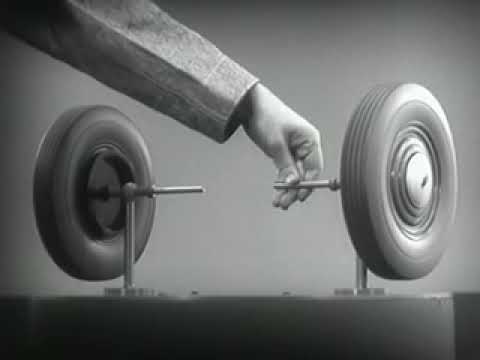
Around The Corner - How Differential Steering Works (1937)
US Auto Industry
 1:24:13
Micro Men - 720p (2009)
gimpymoo
 1:21:22
Light Years Ahead | The 1969 Apollo Guidance Computer
TNMoC
 32:35
Detergent packs are kinda wishy-washy (Dishwashers Explained)
Technology Connections
 41:53
Mechanical Computer (All Parts) - Basic Mechanisms In Fire Control Computers
Excelsior10000
 56:09
Project Code Rush - The Beginnings of Netscape / Mozilla Documentary
The Documentary Network
 32:56
Bret Victor The Future of Programming
Joey Reid
14 comments from Hacker News
There is an upcoming Veritasium video about the "comeback of analogue computers". Part one (teaser): [VIDEO]
You might be interested in the analog computers that were used to compute tide tables back in the day. It's quite fascinating how they even managed to do basic Fourier transforms without electricity: [VIDEO]
The author mentions they were inspired by the Veritasium video on the same topic (without the Lego). [1] I thought I'd link the previous HN discussion. [2] [1] [VIDEO] [2] [LINK]
The product presented: [LINK] made by [LINK] The company presented: [LINK] This is the second video (of a series of two) by Veritasium about analog computers. The first one was [VIDEO] and discussed on Hacker News at [LINK]
In the intro to this video he mentions analogue computers predicting tides. His video before this one[1] goes into detail on that, and it was incredible. In the 1800s, Lord Kelvin spent years working on tidal rise and fall patterns, applying Fourier Transforms to break them down into ten individual sine waves, then combining those sine waves back together to predict future tides. And built analog computers to do all the involved integration, multiplying and summing. It's a part of the history of computing I'd never heard of, despite hearing quite a lot about the dawn of electro-mechanical computers in the early 1900s. [1] [VIDEO]
basicly, we can do things like matrix operations and differntial equations using specialized hardware that performs computation over analog signals rather than buidlign discrete systems. the end result is that we dont' need anywhere near the level of compute to do the job as its done using an analog of the physical process. here's two youtube videos that explain is much better than I could. [VIDEO] [LINK] suffice to say, your average house fly exhibits behavior that absolutely dominates our best drones and with a fraction of the circuitry.
It's a big area of research in AI. Veritasium has two great videos on it: [LINK] [VIDEO] I found a hackernews discussion for the second one: [LINK]
That's really neat. Veritasium did a couple of videos on analog computing a year ago. I'm glad there are people lowering the barrier to entry. [VIDEO] [LINK]
Adding to this list of unorthodox approaches, by modern standards: I've heard in some French conferences of Etienne Klein (I'm not sure how romanticized this is though) that Einstein had some breakthrough while being in a half-asleep state. Here's another similar instance[0][1], better documented, of an engineer working on an automatic level recorder, and "realizing" in a dream that it could be used to improve the accuracy of anti-aircraft guns (WWII). [0]: [LINK] [1]: [VIDEO]
I used to know nothing about Lord Kelvin except he said things like " It seems, therefore, on the whole most probable that the sun has not illuminated the earth for 100,000,000 years, and almost certain that he has not done so for 500,000,000 years "[1] and allegedly "everything which can be discovered, has been discovered"; until last year's Veritasium video on YouTube[2] about analog computers, and learned he invented tide-predicting analog computers to "substitute brass for brains" and add sinusoidal curves, and a mechanical integrator to separate out individual sinusoidal frequencies from the sum. [1] [LINK] [2] [VIDEO] from about 3 minutes.
There is a very good Veritasium video that talks about analog computers and Lord Kelvin’s tide prediction machine: [VIDEO]
The Thomson (also known as Lord Kelvin of degrees K fame) tide predicting machine takes us back to the late 1800s. [LINK] One implementation of it was a notable part of WWII: > They came to be regarded as of military strategic importance during World War I, and again during the Second World War, when the US No.2 Tide Predicting Machine, described below, was classified, along with the data that it produced, and used to predict tides for the D-Day Normandy landings and all the island landings in the Pacific War. [LINK] From Veritasium : The Most Powerful Computers You've Never Heard Of - the tide calculator plays a prominent part of the video. [VIDEO] (the next video is also in the same topic - Future Computers Will Be Radically Different [LINK] and that gets into more modern implementations and uses - [LINK] is the device shown in the video).
Veritasium made a great video on Kelvin's Tide-predicting machine in 2021. Title: The Most Powerful Computers You've Never Heard Of URL: [VIDEO]
So... I remember math including doing quite a bit of geometry by hand and with real tools, at least initially. "Math" is not just the symbol stuff written with a pencil, or with a keyboard. The mechanical analog computers of old (e.g. [VIDEO] , or [LINK] ) are examples too that math is more than symbol manipulation.